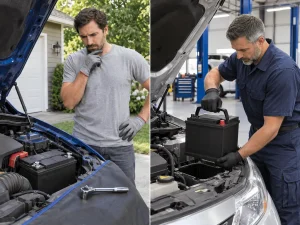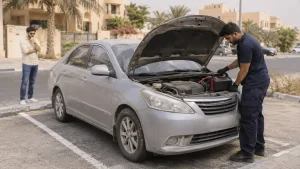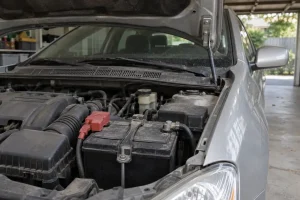
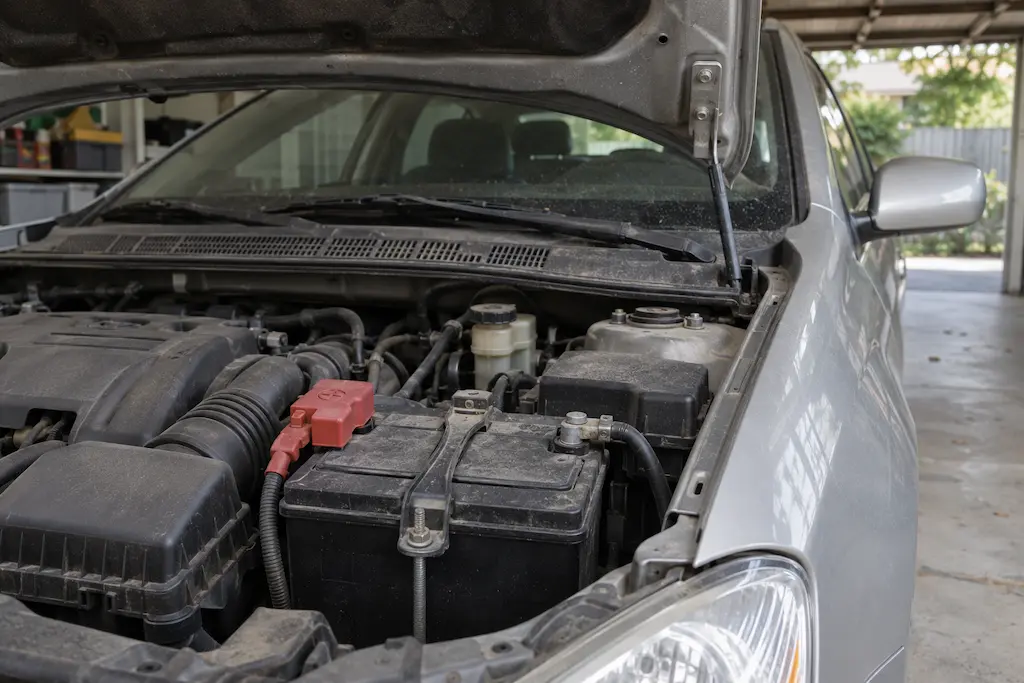
You come back from a two-week trip, walk to the car and press the start button. Nothing happens, or you get a few weak clicks. It’s one of the most common reasons a car won’t start in Dubai, especially after summer travel.
A car battery doesn’t just sit there when the car is off. It loses charge slowly, and how fast depends on the type of car, the battery’s age, and the heat. Battery Fly, a service provider for jump starts and car battery in Dubai, brings you this guide on what might happen to your battery if your car has not been driven in a while.
So, How Long Can a Car Battery Sit Unused?
A healthy battery in a regular petrol or diesel car can usually handle about two to four weeks without driving. After that, the chances of a weak start go up. Some cars manage longer, and others struggle sooner. This is a rule of thumb, not a fixed estimate.
Three things decide where your car falls in that range:
- Battery age. An old battery holds less charge to begin with. In Dubai’s climate, one that’s already a few years old may be close to the end of its life, and a long idle period is often what exposes it.
- Heat. High temperatures speed up the chemical activity inside the battery, so it discharges faster while parked. A car sitting in an open car park in July will lose charge quicker than one in a cool garage.
- What the car draws while off. Alarms, keyless entry, tracking units, dash cams and onboard computers all pull a small amount of power around the clock. Newer cars usually have more of these than older ones.
How long a car battery lasts in Dubai depends on how you treat it.
What Happens to The Battery When a Car Isn’t Driven
A lead-acid battery discharges slowly on its own, even with nothing connected. Add the small constant draw from the car’s electronics, and the charge drops steadily.
The bigger problem is what happens once it gets low. If a battery stays in a discharged state for long, lead sulphate crystals build up on the plates. This is called sulphation, and it permanently cuts the battery’s capacity. A battery that has been fully flattened a few times often never recovers its original strength, even after it’s recharged.
A fully charged battery reads around 12.6 volts at rest. If it’s sitting near 12 volts or lower, it’s heavily discharged and may not start the car.
Petrol and diesel cars
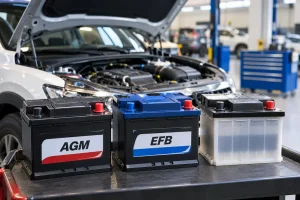
Most petrol and diesel cars on Dubai roads use a conventional 12-volt lead-acid battery. Many newer ones with start-stop systems use an AGM or EFB battery, which handles frequent cycling better but still discharges when the car is left alone.
For these cars, the two-to-four-week range above is a sensible expectation. The engine’s alternator is the only thing that recharges the battery, and it only works when the engine is running. That means a short idle in the driveway doesn’t do much. Starting the car and letting it run for a few minutes can even leave the battery lower than before, because the start itself uses a lot of power.
If you do start it, take it for a proper drive of around 20 to 30 minutes so the alternator can put charge back.
Hybrid cars
Hybrids carry a large high-voltage battery for the electric motor, but they also have a regular 12-volt battery that powers the computers, locks, and the system that “wakes up” the car. That small battery is usually the one that fails in a parked hybrid.
The high-voltage pack is managed by the car and usually copes with idle time better. But if the 12-volt battery goes flat, the car may refuse to start or go into ready mode even though the main pack is fine. So the same precautions apply as for a petrol car, and it’s worth checking your owner’s manual for anything specific to your model.
Electric cars
If you’re wondering how long a car battery in Dubai can last without driving, the answer is a little different for electric vehicles. EVs have two batteries to consider when parking for an extended period.
The high-voltage battery loses a small amount of charge each day while parked. Features like cabin overheat protection, security monitoring, and app connectivity keep the car partly awake, and hot weather adds a little more drain. For long periods of parking, most manufacturers advise against leaving it at 100% or letting it run close to empty. The ideal level differs by brand, so check the manual or the app. If you can leave the car plugged in, it will usually manage its own charge.
The 12-volt battery is the one many owners forget. It runs the locks, screens, and the systems that start the main battery, so if it goes flat, the car may not unlock or power on, even with a full main pack. Most EVs top it up from the main battery, but it can still weaken with age. If it does need help, follow the manual’s steps to jump start the 12-volt side, since the procedure differs from a normal car.
What to Do If You Didn’t Drive Your Car in a While?
You can slow the drain with a few simple habits.
- Drive it regularly. A 20-30 minute drive every week or two is better than idling in place. Try to include some steady driving, not just stop-start traffic.
- Park in shade or a covered spot. Less heat means slower discharge. Protecting your car battery from heat damage in Dubai goes a long way.
- Use a battery maintainer. A smart charger or maintainer keeps the battery topped up without overcharging it. It’s the most reliable option for cars that will sit for a month or more, and it’s much safer than a basic charger left connected.
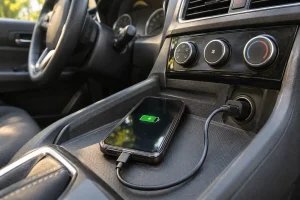
- Turn off extras. Unplug dash cams, chargers, and other accessories that stay powered when the car is off.
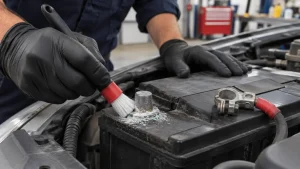
- Check the terminals. Corrosion or a loose clamp can make a weak battery seem worse. A quick look before you leave is enough.
- Be careful with disconnecting the battery. Removing the negative terminal stops the drain, but on many modern cars it can reset settings or trigger warning lights. Check the manual first, or ask a technician.
- Ask someone to check on the car. If you’re away for a long period, a friend or family member who can take it for a drive helps more than most people expect.
- Look at the battery before you go. If it’s older and you’re heading away for a month, it’s often cheaper to deal with it first. Getting a battery change in Dubai done before travel is usually simpler than being stranded on your return.
Car Won’t Start After Sitting in The Garage?
If your car has been sitting in your garage in Dubai for a few weeks to a few months, it is bound not to respond instantly. If that happens, start by checking the basics. If the dash lights are dim or the car only clicks, the battery is likely low. Battery Fly provides you with a jump start in Dubai, which helps get the car running, and it can be arranged at your home or office if you don’t have cables or someone to help.
After a jump, you should drive the car for a reasonable stretch. If it fails to start the next day again, the battery has probably been damaged by the discharge and won’t hold a charge properly anymore. At that point, a car battery replacement is the usual fix.
The correct size and type matter, particularly in cars with start-stop systems, which need AGM or EFB batteries. When you’re comparing brands, a Fiamm battery in Dubai might be one option to consider, as long as it matches your car’s specifications.
Frequently Asked Questions
Can a car battery die from not being driven for a week?
Usually not, if it’s healthy. A weak or old battery might, especially in hot weather.
Is it enough to start the car and let it idle?
Not really. Idling gives the battery very little charge, and a short run can leave it worse off. A proper drive is better.
Does an electric car need the 12-volt battery checked too?
Yes. A flat 12-volt battery can stop an EV from powering on, even when the main battery is full.
Should I disconnect the battery for a long trip?
It can work, but it isn’t suitable for every car. Check the manual first, or use a maintainer instead.
How do I know if the battery was damaged by sitting?
Slow cranking, dim lights, or a car that won’t start again after a jump are common signs.