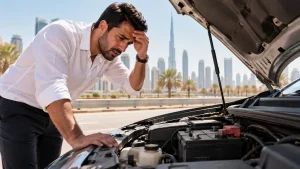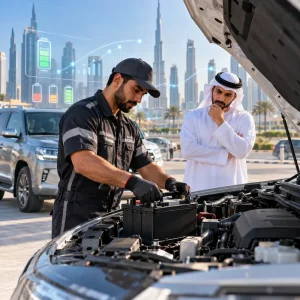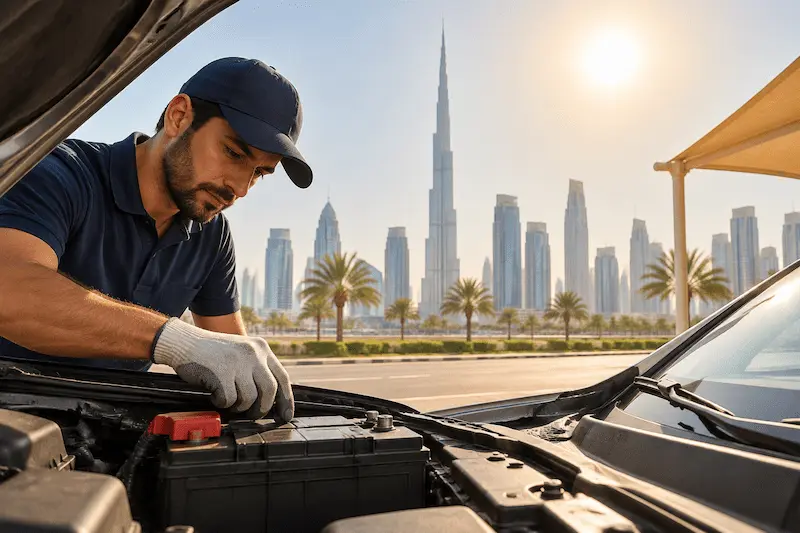
It’s 7:40 a.m. in Business Bay. You’re dressed for work, coffee in one hand, keys in the other, and your car answers with a dull click instead of an engine roar. No warning lights. No strange noises the night before. Just silence, and a parking lot that’s already pushing 38°C before breakfast.
If this sounds familiar, you’re not alone. It is one of the most common breakdown situations drivers face across Dubai, and many eventually need car battery replacement in Dubai after discovering that extreme heat has slowly weakened their battery over time. In most cases, the real damage was done weeks or months earlier, quietly, under the hood, while the battery sat baking in the heat.
The good news: heat damage is largely preventable once you understand how it happens and what steps can help extend your car battery’s life in Dubai’s harsh climate.
Why Dubai’s Heat Is So Hard on Car Batteries
Most drivers assume batteries fail in winter. In moderate climates, that’s often true cold temperatures reduce a battery’s cranking power temporarily. But in Dubai, the situation is different. Heat doesn’t just weaken a battery temporarily; it permanently accelerates the chemical reactions inside it, speeding up corrosion of the internal lead plates and evaporating the electrolyte fluid that the battery needs to hold a charge.
This is why many drivers only realize their battery is failing when they notice slow engine starts, dim lights, or a sudden breakdown. Understanding how to know if your car battery is dying can help you identify these warning signs early and replace the battery before it leaves you stranded. Once heat damage is done, it cannot be reversed.
The research behind it According to independent battery research from Battery University, every 8°C rise in operating temperature above 25°C roughly cuts a sealed lead-acid battery’s lifespan in half. A battery rated to last 10 years at room temperature could realistically survive only a fraction of that in a Dubai engine bay.
That’s not a small-print statistic it’s the reason batteries in the UAE behave so differently from batteries in Europe or the northern US.
The Dubai Reality, By the Numbers
| Condition | Typical Battery Lifespan |
|---|---|
| Moderate climate (e.g., UK, Northern Europe) | 4–5 years |
| Dubai / UAE summer conditions | 2–3 years, sometimes 18–24 months |
| Battery left parked in direct sun, short daily trips | Often under 18 months |
Under-bonnet temperatures in Dubai regularly exceed ambient air temperature, and with summer highs routinely hitting 45°C, heat becomes the single biggest factor shortening a car battery’s working life in the UAE. Industry data from local battery service providers backs this up: extreme summer heat speeds up fluid evaporation and internal plate corrosion, cutting average battery life to roughly 2–3 years compared with 4–5 years in cooler climates.
It’s also why breakdown call-outs spike noticeably during the hottest summer months across the UAE, even for batteries that are barely a year old.
Warning Signs Your Battery Is Struggling With the Heat
Batteries rarely fail without hints. Watch for:
- Slow or hesitant engine cranking
- Dimming headlights or interior lights
- Dashboard battery warning light
- Swelling or a bulging battery case
- White or blue-green corrosion
- Electrical glitches
Good to know: A battery can test as “healthy” on a basic check right up until the moment it fails completely. If you’re seeing even one of these signs, book a proper diagnostic, don’t wait for a dead start.
How to Protect Your Battery From Heat Damage in Dubai
1. Park Smart, Every Time
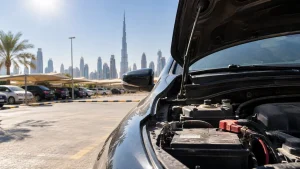
Direct sun on an engine bay can push under-bonnet temperatures well above the surrounding air. Where possible:
- Use covered or basement parking
- Use a windscreen sunshade to reduce cabin and engine bay heat buildup
- Avoid parking on hot asphalt for extended periods when shaded alternatives exist
2. Get Ahead With Regular Battery Testing
Voltage and load testing catch battery degradation long before a total failure. Most reputable garages in Dubai offer this as part of a routine car battery testing service, it takes only a few minutes and can help prevent unexpected situations where you need a jump start on the roadside. Regular testing can save you from inconvenient breakdowns and expensive emergency callouts.
3. Keep Terminals Clean and Tight
Heat accelerates corrosion buildup on terminals, which increases resistance and forces the alternator to work harder. Clean terminals with a wire brush and check for a snug, secure connection every few months.
4. Choose a Heat-Rated Battery
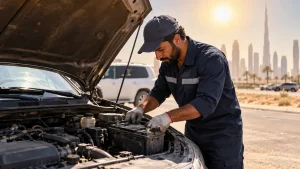
Not all batteries are built the same. In Dubai, look for batteries specifically rated for high-temperature performance rather than the cheapest option on the shelf, the price difference is usually recovered in extended lifespan. A qualified car battery replacement in Dubai provider can advise on the right spec for your vehicle and usage.
5. Avoid Short Trips With Heavy AC Load
Frequent short drives don’t give the alternator enough time to fully recharge the battery, especially with the AC running at full blast the moment you start the engine. Where practical, let the vehicle run long enough for a full recharge cycle.
6. Schedule Pre-Summer Checks
The smartest time to test your battery isn’t in July when it fails it’s in March or April, before peak heat arrives. Pair this with a broader car AC and cooling system check, since a struggling AC system often puts extra strain on the electrical system too.
Best Battery Types for Dubai’s Climate
| Battery Type | Heat Resistance | Typical Lifespan in Dubai | Best For |
|---|---|---|---|
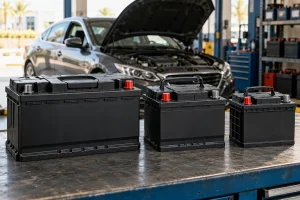
| Standard flooded lead-acid | Low | 12–18 months | Budget-conscious, short-term use |
| Calcium-calcium (Ca-Ca) | Moderate–High | 2–3 years | Most daily drivers |
| AGM (Absorbent Glass Mat) | High | 3–4 years | High electrical load, SUVs, newer vehicles |
| Premium heat-rated (e.g., tropicalized formulations) | Very High | 3–5 years | Long-term value, extreme heat exposure |
When to Repair vs. Replace
Use this quick checklist before deciding:
- Battery under 18 months old, one warning sign only → Book a diagnostic test first
- Battery 2+ years old in Dubai conditions → Plan for replacement proactively, don’t wait for failure
- Visible swelling, leaking, or corrosion → Replace immediately, don’t attempt to “test through” a damaged case
- Slow cranking + dimming lights together → Almost always a battery (not alternator) issue, but worth a full electrical check
Frequently Asked Question
Q: How long does a car battery actually last in Dubai?
Most car batteries in the UAE last around 2 to 3 years due to extreme summer heat, noticeably shorter than the 4–5 years typical in moderate climates.
Q: Is heat really worse than cold for car batteries?
Yes. Cold temporarily reduces battery output, but the battery recovers once temperatures rise. Heat causes permanent internal damage that can’t be undone.
Q: Can I prevent heat damage completely?
Not entirely, but shaded parking, regular testing, clean terminals, and a heat-rated battery can meaningfully extend your battery’s working life in Dubai’s climate.
Q: What’s the earliest sign of heat-related battery damage?
Slightly slower engine cranking in the morning is often the first noticeable sign, even before dashboard warnings appear.