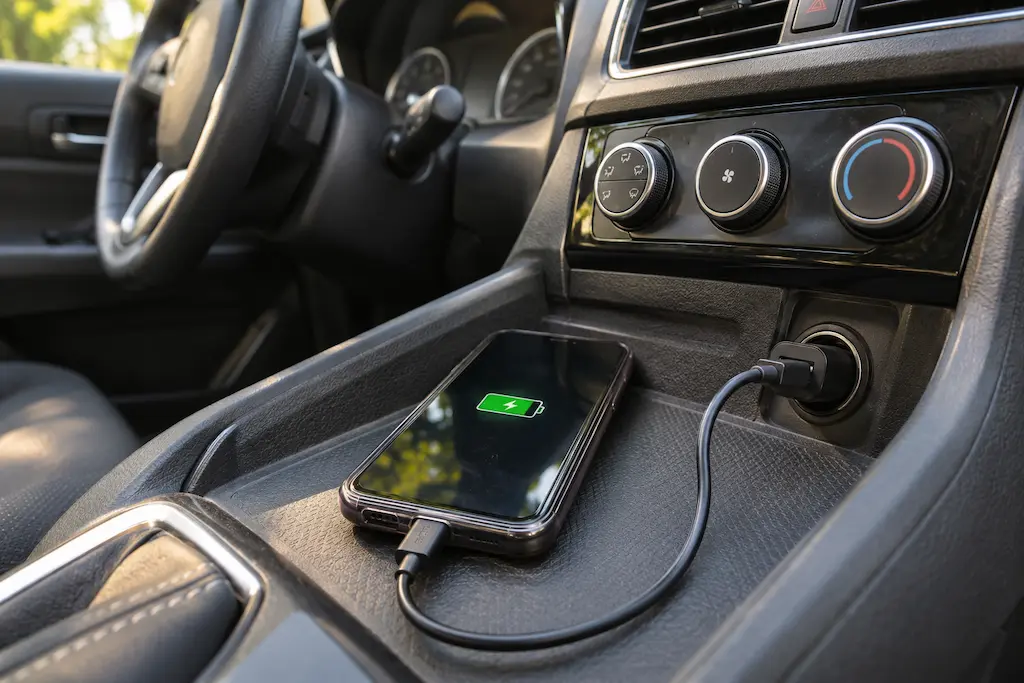
You’re crawling along Sheikh Zayed Road at 6pm, your phone is on 4%, and the meeting you’re driving to just moved up. You plug the phone into the car’s USB port and then the thought hits you. Is this little cable quietly draining the thing that starts your car? It’s one of the most common questions drivers ask us at Battery Fly, the team that fits a new car battery in Dubai every day, and the honest answer is: yes, technically, but almost never enough to matter. The difference between a harmless top-up and a dead battery on a Monday morning comes down to three things: whether your engine is running, how old your battery is, and whether your car’s socket stays live when you switch off.
Charging your phone in the car drains the battery, but only by a tiny amount, and only in one situation that matters. While you are driving, the answer is effectively no. Your car’s alternator is generating power the whole time, and your phone charger is such a small load that the alternator covers it without noticing.
The only time phone charging can genuinely drain your battery is when the engine is off and the phone keeps drawing power from a battery that nothing is recharging. Even then, a healthy battery handles it for hours. It becomes a real problem only when the battery is already old or weak, the car has not been driven for days, or the phone is left plugged in overnight in a socket that never switches off.
How Much Power Does a Phone Charger Really Use?
A phone charger is one of the smallest electrical loads in your car. Here are the numbers:
- A standard phone charger draws 5 to 12 watts – about 0.4 to 1 amp from your car’s 12-volt system.
- A fast charger draws more, roughly 1.5 to 3 amps, because it pushes power into the phone faster.
- A wireless charging pad draws more still, because 20 to 30% of its energy is lost as heat before it ever reaches the phone.
- A charger plugged in but doing nothing draws almost nothing – about 1 to 3 milliamps, just enough to light its little LED. A cable on its own, with no charger attached, draws zero.
Now compare that with what your battery holds. A typical car battery is rated at 40 to 75 amp-hours, and most healthy ones sit around 48 to 50 amp-hours. But a starter battery should never be drained below about half its charge if you still want the car to start, so a 50 amp-hour battery gives you roughly 25 amp-hours of usable energy.
Do the maths on that and the picture is clear. A standard 5-watt charger drawing 0.4 amps would take around 60 hours to use up that usable 25 amp-hours. A fast charger drawing a constant 2.5 amps would take about 10 hours. That is why the sources agree: charging a phone for an hour or two, even with the engine off, is not going to flatten a healthy battery. Leaving it plugged in overnight, night after night, in a car that barely gets driven – that is a different story.
For scale, your car’s air conditioning draws thousands of watts. Your phone charger draws 5 to 15. One study quoted by Bloomberg put the fuel cost of phone charging at about 0.03 miles per gallon. so small it disappears into normal measurement error.
Charging With the Engine Running: Don’t Worry About It
When the engine is running, your phone is not really charging from the battery at all. The alternator takes over as the car’s power source the moment the engine turns, generating electricity at 13.5 to 14.5 volts enough to run the lights, the ignition, the air conditioning and the radio, while also recharging the battery at the same time.
A modern alternator can output over 1,000 watts. Your phone charger wants 5 to 15. It is a rounding error. The battery stays fully charged, the phone charges, and nothing is being drained. This is true whether you are driving down Sheikh Zayed Road or sitting in traffic with the engine idling, as long as the engine is turning, the alternator is working.
There is one small exception worth knowing. Some cars’ built-in USB ports only supply about 0.5 amps, which is less than a wall charger. If you are running navigation and music at the same time, the phone can use power faster than that weak port replaces it, and the percentage can still fall while it is plugged in. That is a charging-speed problem, not a car-battery problem a 12V socket adapter with a 2-amp or higher output charges far faster.
Charging With the Engine Off: The Only Time It Matters
Switch the engine off and everything changes. The alternator stops, and every electrical draw comes straight out of the battery with nothing putting energy back in. This is the only scenario in which a phone charger can drain your car battery and whether it actually does depends on your car.
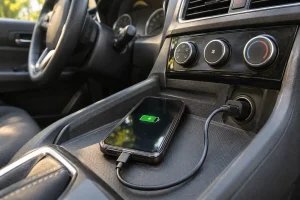
Most modern cars protect you automatically. Their USB ports and 12V sockets are “switched”, meaning they cut power when you turn the ignition off. Plug your phone in, switch off, walk away, and nothing is being drawn at all. If your car’s ports go dead with the ignition, you have nothing to worry about.
Some cars have “always-on” sockets. These stay live even with the ignition off, and they are the ones that cause trouble. A phone left charging in an always-on socket overnight will keep drawing power for hours. One night on a healthy battery usually still will not stop the car starting, but on a battery that is already weak, or a car that has been sitting for days, it can be the final straw. A normal parked car already draws 20 to 50 milliamps for its clock, alarm and computers; a charger adds to that baseline.
How do you know which kind you have? Plug your phone in, switch the car off, take the key out and wait a minute. If the phone keeps charging, your socket is always-on — and you should make a habit of unplugging the cable every time you park.
When a Phone Charger Can Actually Kill Your Battery
A phone charger on its own almost never kills a healthy battery. It kills a battery that was already on its way out. These are the situations where it genuinely matters:
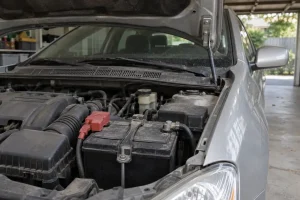
Your battery is old. In Dubai’s heat, car batteries typically last two to three years rather than four or five. A battery in its third summer holds far less charge than its label promises, so a draw that a new battery would shrug off can push an old one below the level needed to crank the engine.
Your car sits unused for days. Every day parked, the battery loses a little charge to its own electronics. Add a phone charging in an always-on socket and the drain doubles up. This is the classic Monday-morning dead battery after a car has sat in a basement car park all weekend.
You only ever drive short trips. School runs and five-minute commutes never give the alternator long enough to replace the energy that starting the car used. A battery that is chronically undercharged has no reserve, so even a small extra draw matters.
You use a fast or wireless charger with the engine off. A fast charger at 2.5 amps drains the usable reserve roughly six times faster than a standard 5-watt charger, and a wireless pad wastes a fifth to a third of its energy as heat. Neither is a problem while driving. Both are worth unplugging when parked.
Your charger is cheap or damaged. A faulty charger can draw far more than its rating, and some keep drawing even when no phone is connected. If a charger feels hot when it should be idle, or your phone charges slowly and the cable smells warm, replace it, it is not worth the risk to a battery that costs far more than the charger.
Signs Your Car Battery Is Already Weak
The charger is rarely the real problem. Usually it just exposes a battery that was already struggling. Watch for these signs:
- The engine cranks slowly, or takes a second longer to catch than it used to
- The headlights dim when you start the car, or the dashboard lights flicker
- The battery warning light appears on the dashboard
- Electrical things behave oddly windows move slowly, the radio resets, the clock loses time
- The car needs a jump start more than once
- The battery is more than three years old, especially if it has survived three Dubai summers
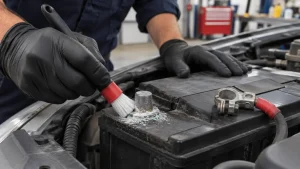
If any of these sound familiar, the phone charger is not your problem, the battery is. Get it tested before it strands you somewhere. A proper battery test takes a few minutes and tells you whether the battery, the alternator, or a parasitic drain is the real cause.
How to Charge Your Phone in the Car Without Worrying
You don’t need to stop charging your phone in the car. You just need to do it the way that costs your battery nothing:
- Charge while the engine is running. This is the one rule that matters most. Driving or idling, the alternator covers it.
- Unplug when you park. Especially if your socket stays live with the ignition off. Make it part of switching off, like taking the key.
- Use a good 12V adapter, not a dashboard USB port. A proper adapter delivers 2 amps or more and charges faster; built-in ports often deliver only 0.5 amps.
- Don’t leave the charger plugged in overnight. An idle charger draws almost nothing, but a faulty one doesn’t and an overnight charge in an always-on socket is the one scenario that actually flattens batteries.
- Keep a power bank in the car. For the times you need to charge with the engine off, a power bank does the job without touching the car battery at all.
- Drive a proper trip once a week. A 20 to 30-minute drive gives the alternator time to fully recharge what starting the car used, which matters far more than any phone charger.
- Replace a weak battery before it strands you. If your car is slow to start, no charging habit will save the battery, it needs testing, and probably replacing.
What to Do If Your Battery Dies Anyway
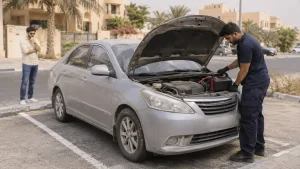
If you turn the key and get a click, or nothing at all, the phone charger is probably not the cause — but the fix is the same either way. A jump start will get you moving, and BatteryFly’s jump start service can reach you wherever you are in Dubai. But a battery that has gone flat once will usually do it again, especially in this heat, so get it tested the same day rather than assuming it was a one-off.
If the test shows the battery is finished, you will need a car battery replacement in Dubai, and it is worth doing properly rather than grabbing the cheapest listing. Our comparison of buying a car battery online vs having one fitted explains what the online price leaves out, fitting, testing, old battery disposal, and registering the new battery to your car’s energy system. When the new battery arrives, take a minute to check the battery manufacturing date before you accept it, because a battery starts ageing the day it is made, not the day it is fitted. And if you are choosing between brands, our guide to the best car battery in the UAE explains why the right size and type matter far more than the badge on the label.
Frequently Asked Questions
Does charging my phone in the car drain the battery?
Yes, technically, but only by a tiny amount. While the engine is running, the alternator covers it completely. With the engine off, a standard charger draws about 0.4 amps, and it would take roughly 60 hours to use up the usable charge in a healthy 50 amp-hour battery. It only becomes a problem with an old or weak battery, or a phone left charging overnight in an always-on socket.
Can charging my phone overnight in the car kill the battery?
It can, if your car’s 12V socket stays live with the ignition off and the battery is already weak or the car has not been driven for days. On a healthy battery, one night of phone charging alone is unlikely to stop the car starting, but it is the one scenario worth avoiding, so unplug before you walk away.
Does a fast charger drain a car battery faster?
Yes. A fast charger draws 1.5 to 3 amps, roughly six times more than a standard 5-watt charger, so it uses up the battery’s reserve faster when the engine is off. While driving it makes no difference at all. Wireless chargers draw more too, because 20 to 30% of their energy is lost as heat.
Will leaving the charger plugged in drain the battery even with no phone attached?
Almost never. An idle charger draws only 1 to 3 milliamps, and a cable on its own draws nothing. The exception is a cheap or faulty charger, which can draw far more, if yours feels hot while idle, replace it.
How long can I charge my phone with the engine off?
On a healthy battery, a couple of hours is fine. Beyond that, the risk grows, especially with a fast charger, an old battery, or a car that has been sitting unused. If you regularly need to charge with the engine off, keep a power bank in the car instead.